Questions to Ask When Buying a Used 4WD
Ask the right questions when buying a used 4WD, including about touring loads, modifications, recovery use, service history and compliance.
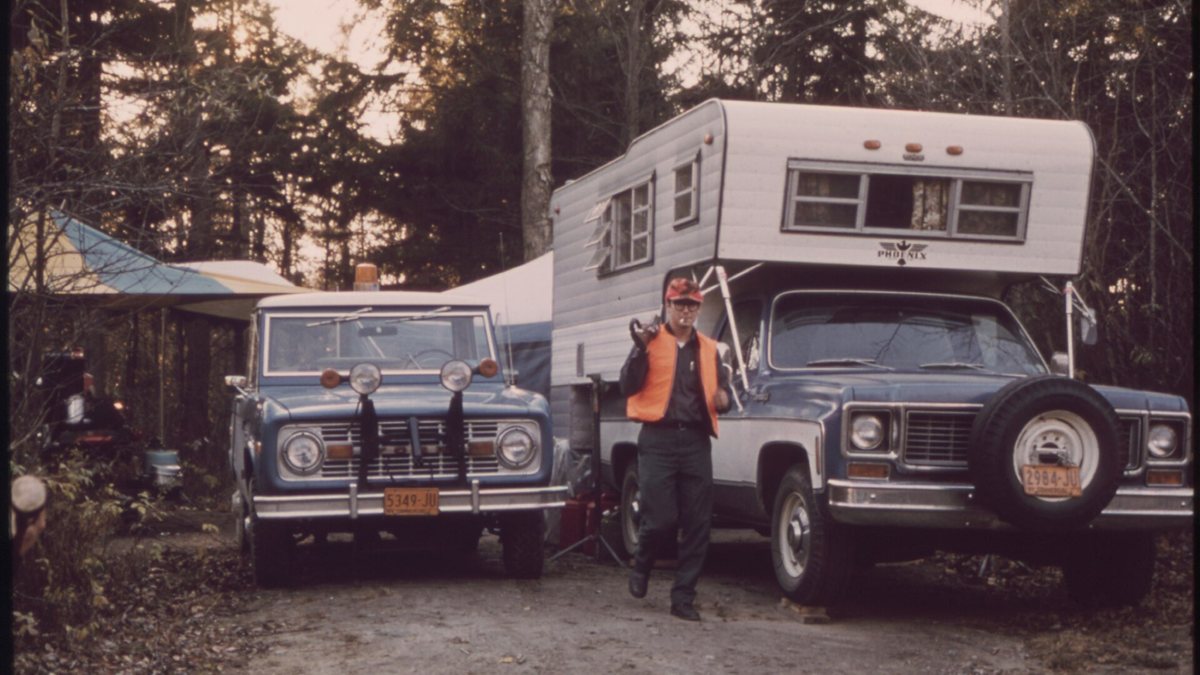
Anne LaBastille · Public domain
A used 4WD may have spent its life on school runs, towing a caravan, touring remote tracks or tackling difficult terrain. Those histories can leave very different wear patterns, even when two vehicles have similar kilometres.
Ask questions that help you understand how the vehicle was used, what was changed and what evidence supports the seller’s answers.
Ask about maintenance and repairs
Ask what work is outstanding and whether the seller has quotes or inspection reports. Vague answers are not proof of a problem, but they are a reason to investigate further.
Check whether the service history matches the odometer and vehicle age. Look for gaps, repeated repairs and evidence of maintenance that fits the manufacturer’s schedule.
If records are missing, budget for a thorough independent inspection and ask the mechanic to identify likely catch-up work.
Ask how the vehicle was used
Find out whether it regularly towed, carried a heavy touring load, travelled on beaches or rough tracks, crossed water or spent time in dusty conditions. Ask where it was usually driven and whether it has been used for commercial work.
The answer is only a starting point; inspect for evidence and have the vehicle assessed professionally.
Look carefully at underbody protection, suspension mounts, towbar, recovery points, wheels and tyres. Scrapes or mud are not automatically a problem, but damage, poor repairs or inconsistent stories deserve attention.
Ask for a full list of modifications
Request the make, model and part number of major accessories: suspension, wheels and tyres, bull bar, winch, canopy, drawers, auxiliary battery, exhaust, engine tuning and towing equipment.
Ask who installed them and whether invoices and instructions are available. A seller who knows the build should usually be able to explain its purpose and history.
For significant modifications, ask for the required certification and compliance documents. Rules differ by jurisdiction, and not every change needs the same process.
In NSW, significant modifications may require assessment by a licensed certifier. Confirm the vehicle’s current status with the relevant authority rather than relying on “it passed rego” as proof that every modification is compliant.
Check payload and towing suitability
Accessories can use much of a 4WD’s payload before passengers, water and camping gear are added. Ask whether the vehicle has been weighed in touring condition and whether any GVM upgrade is documented.
If you plan to tow, check GVM, GCM, maximum towing capacity, towbar and coupling ratings, trailer limits and towball download.
Calculate your own intended load instead of assuming the previous owner’s setup will suit you. A vehicle that was adequate for two people and light luggage may not be suitable for a family, roof-top tent, fridge, water and a caravan.
Complete independent checks
Run an official PPSR search using the VIN, check recalls and verify registration and identity. Arrange an independent mechanical inspection and a safe test drive.
For a modified vehicle, consider whether the inspector has experience with the relevant systems and can identify issues that need a specialist assessment.
Ask for the seller’s permission to verify major claims with the installer or workshop if appropriate. Compare the asking price with similar vehicles, adjusting for condition, records, accessories and any work required.
A well-documented build may justify a premium to the right buyer, but expensive accessories do not necessarily return their full cost at resale.
A targeted underbody inspection
Ask the independent inspector to pay attention to underbody damage, suspension mounts, steering components, differentials, transfer case, cooling system, leaks and evidence of poorly repaired impacts.
The precise inspection depends on the vehicle and its design. Do not attempt to inspect beneath a vehicle that is supported only by a jack or parked unsafely.
A 4WD may have protective plates or accessories that hide areas from a casual look. Ask whether the inspector can assess behind or around those parts safely.
If the seller has invoices for major work, compare them with what the inspection finds rather than treating the invoice as proof that the entire vehicle is sound.
Frequently asked questions
Should I avoid a 4WD that has been off-road?
Not automatically. Use history, condition, maintenance and independent inspection to assess the vehicle rather than treating off-road use alone as a verdict.
Do modifications add their full cost to resale value?
Usually you should not assume that. Buyers value fit, condition and documentation differently, and some modifications narrow the market.
What is the most important check?
No single check is enough. Verify identity and history, inspect condition, review modifications and obtain independent mechanical advice.