What Does GVM Mean on a 4WD?
Learn what gross vehicle mass (GVM) means, what counts towards it and why accessories can reduce your remaining payload.
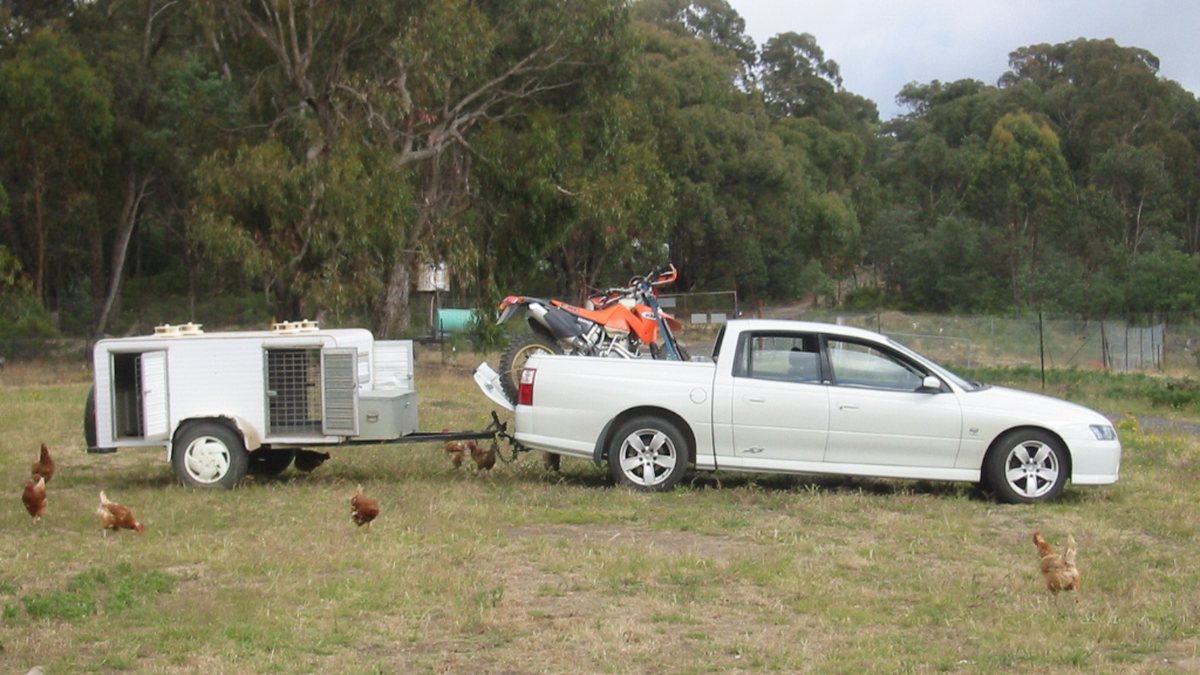
R Walker from Bathurst · CC BY 2.0
GVM stands for gross vehicle mass: the maximum loaded mass specified for a vehicle by its manufacturer or relevant registration authority. It is not the weight of the empty vehicle, and it is not the amount of gear you can add.
For a touring 4WD, understanding GVM matters because accessories, passengers, water, fuel and camping equipment all consume the available payload.
GVM, tare mass and payload are different
Payload is commonly used to describe the difference between a vehicle’s relevant unladen mass and its GVM, but the exact calculation should use the mass definitions and figures applicable to that vehicle.
Check the compliance information, manual and registration details rather than relying on a sales brochure alone.
Payload is consumed by people as well as equipment. A bull bar, winch, second battery, canopy, drawers, roof rack, long-range tank and accessories may be fitted before you add luggage.
Then passengers, water, food and recovery gear add more. A vehicle can look lightly loaded while approaching a rated limit.
Why GVM is not the only limit
Even if total vehicle mass is below GVM, individual axle ratings, tyre ratings, wheel ratings and other component limits still matter.
Towing introduces additional limits, including gross combination mass (GCM), towbar and coupling ratings, trailer mass and towball download. The applicable limit is not whichever number is largest; all relevant ratings must be respected.
The National Heavy Vehicle Regulator explains manufacturer mass limits and how GVM and GCM are used. Light-vehicle owners should also consult their vehicle documentation and state or territory authority.
How modifications change your available payload

Accessories can make a vehicle more capable or practical, but their mass reduces what remains for people and touring equipment.
If you add a steel bar, winch, drawers, fridge, canopy and roof load, calculate the total before buying more gear. Ask suppliers for actual component weights, including brackets, wiring and mounting hardware.
Suspension upgrades do not automatically increase a vehicle’s legal GVM. A certified upgrade may be available for some vehicles, but requirements depend on the vehicle, timing, jurisdiction and modification.
Speak with a licensed certifier or relevant authority before making a plan; do not treat a spring or shock absorber upgrade as proof that the vehicle can legally carry more.
How to check your loaded vehicle
List the fitted accessories and the mass of each item, then add passengers and expected cargo. This gives an estimate, but a public weighbridge can provide a more reliable picture of the actual loaded vehicle.
Weigh the vehicle in the configuration you intend to tour with and ask about axle weights if your setup is close to a limit.
Keep a record of the weighing result, accessories and any approved upgrade documentation. Recheck after substantial changes.
Wired Build’s build and expense records can help keep accessory weights, part numbers and installation details together, but the final assessment should be based on verified ratings and actual mass.
A pre-trip mass checklist
Before a long tour, confirm GVM, GCM and axle limits; identify the actual mass of permanent accessories; count passengers and luggage; include water and other consumables; check roof and tow limits; and weigh the loaded vehicle if there is any doubt.
Recalculate when the load or configuration changes.
If you cannot verify the applicable ratings, pause before towing or travelling with a heavy load. Excess mass can affect handling, braking, tyre loading and compliance.
Treat weight as a design constraint from the start of a build, not as a problem to solve after every accessory has been installed.
Worked example: why accessories matter
Suppose a vehicle has 600 kg of nominal payload before accessories and occupants.
A bar, winch, canopy, drawers, second battery and roof equipment use part of that allowance; then the driver, passengers, water, food and camping gear consume more.
The exact numbers must come from the vehicle and accessory specifications, but the principle is simple: payload is a shared allowance, not a separate allowance for each upgrade.
This is why a build sheet should include mass as well as price. A low-cost accessory can still create a weight problem, while a heavier accessory may be justified if it replaces several items.
Make the trade-off before purchasing, and verify the loaded vehicle on a weighbridge if the margin is small.
Common GVM misunderstandings
A vehicle’s GVM is not the same as its towing capacity, and a GVM upgrade does not necessarily change GCM or every axle and tyre rating. Nor does fitting heavier springs automatically make the vehicle legally capable of carrying more.
Each limit serves a different purpose and must be checked against the approved configuration.
Frequently asked questions
Does a GVM upgrade mean I can tow more?
Not necessarily. Towing is governed by several separate ratings, including GCM, tow capacity, towbar and coupling ratings, trailer limits and axle limits.
Do suspension upgrades increase GVM?
Not by themselves. Any increase must be lawful and properly approved for the specific vehicle and jurisdiction.
How do I know my actual touring weight?
Estimate from component weights, then use a public weighbridge for a more reliable result, ideally checking axle weights as well as total mass.